Author: Mahabutavani

  • Thirty Kilometres From The Epicentre Of Destruction, Nature Wore A Human Face”.

    Thirty Kilometres From The Epicentre Of Destruction, Nature Wore A Human Face”.

    The world outside felt heavier than usual this Easter. With the shadow of the US and Iran conflict stretching across global headlines and the kind of collective anxiety that settles into ordinary households when geopolitical tensions begin to feel uncomfortably close to home, we made a deliberate and perhaps quietly defiant choice to travel. Japan had been on our itinerary and this Easter break finally became the moment we honoured that promise to ourselves. There is something profoundly intentional about choosing to visit a country that has already lived through the absolute worst that human conflict can deliver and emerged not merely intact but genuinely, almost incomprehensibly, luminous. Our itinerary included several destinations across Japan but it was Hiroshima that sat at the centre of everything, the destination we approached with the most reverence and the least certainty about how we would feel standing inside it.

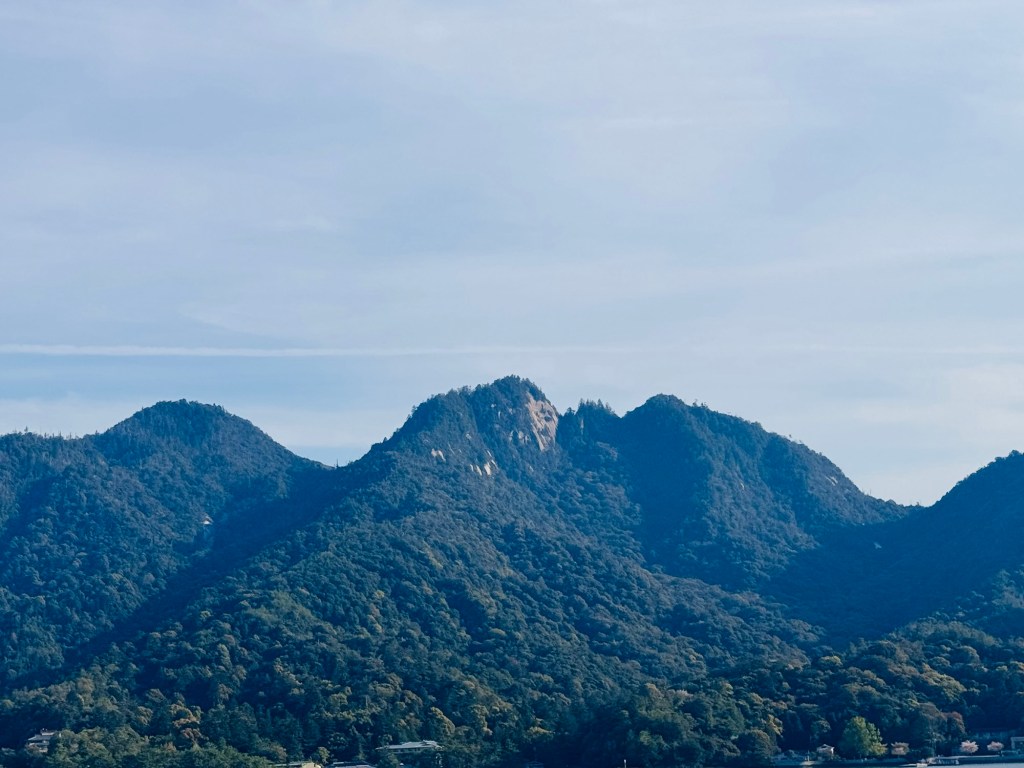
    We had just walked out of the Hiroshima Peace Memorial Museum and I can tell you with complete honesty that no vocabulary I possess is adequate enough to describe what that experience does to the architecture of your soul. The melted watches permanently frozen at 8:15 AM. The human shadow burned into stone steps by a heat so violent it rewrote the physical world in an instant. The small battered lunch box belonging to a child who simply never came home. I walked out into the Hiroshima afternoon carrying something that was not quite grief, not quite guilt and not quite gratitude but something ancient and wordless that lived underneath all three simultaneously. We took the ferry to Miyajima Island that same afternoon, perhaps because the human spirit instinctively reaches for beauty when it has been standing too long inside darkness. The ferry crossing takes barely ten minutes but somewhere in the middle of that short journey standing at the railing with my camera raised toward the approaching island I stopped completely. There in the rocky ridgeline of Mount Misen rising with quiet authority above the treeline was unmistakably and undeniably a human face. Not a suggestion. Not a trick of afternoon light. A face of breathtaking composure with its brow settled, its eyes closed and its lips gently at rest as though a giant of immeasurable age had simply decided one unremarkable morning millions of years ago to lie down and become part of the permanent earth.

    We climbed the temple stairs of Misen that same evening and I want you to understand that these are not the manicured steps of a tourist attraction. They are ancient, uneven, moss-edged and genuinely demanding, the kind of stairs that require something real from your body before they offer you anything in return. My legs were exhausted and my heart was still weighted from everything Hiroshima had placed inside it that morning, yet with every upward step I found myself thinking about the people of that city, the ones who never got to feel their legs ache from a good honest climb up a sacred mountain, the ones who never got another ordinary Tuesday. Climbing began to feel less like exercise and more like an act of living on behalf of those who could not. At the summit temple complex there burns a flame that the monk Kobo Daishi lit in the year 806 AD, a flame that has continued burning without interruption for over twelve hundred years through war and neglect and every catastrophe that history has thrown at this corner of the world. Standing before that flame with the weight of Hiroshima still fresh in my chest I felt something genuinely shift inside me because the message of that unextinguished fire was impossible to misread. Some things are simply more stubborn than destruction. Some flames simply refuse the instruction to go out.

    From the summit of Misen the entire Seto Inland Sea unfolds before you like a revelation, islands scattered across silver water like punctuation in a sentence written by the earth itself, ferries crossing in slow deliberate arcs and the famous floating torii gate burning orange far below against the darkening water. I photographed everything yet the image I return to most consistently is not from the summit at all but from the ferry, that first unguarded moment when I raised my phone and the mountain showed me its face. That face exists less than thirty kilometres from the precise coordinates where an atomic bomb dissolved thousands of human faces in a single morning of 1945, and the proximity of those two facts, the obliteration and the endurance, the violence and the patience, is something I am still in the process of fully absorbing. Nature had placed a guardian face above this particular corner of the world and left it there across millions of years of geological time as though in quiet preparation for the morning a traveller would arrive from Hiroshima needing to be reminded that beauty outlasts destruction, that the earth keeps a human face turned gently toward us even in our most catastrophic moments and that hope is not a feeling but a geological fact written in stone above an island that refused to stop being sacred. Hiroshima broke something open in me that morning. Mount Misen, with extraordinary and unhurried grace, put it back together.

    The quote that sums it all up :

    Civilisations may fracture the earth with their wars and their wounds, but the nature itself has never forgotten the shape of a human face and never stopped wearing it with grace .

    Mount Misen

    Have you ever experienced a moment in nature that arrived exactly when your soul needed it most? I would love to hear your story in the comments
  • Temple of Apollo

    Temple of Apollo

    Strength and Beauty Outlast Time

    The Temple of Apollo is more than an ancient ruin. It is a powerful reminder of how nature and human history are forever connected. Standing before its weathered columns, one cannot help but see the dialogue between stone and sky, history and landscape, resilience and time.

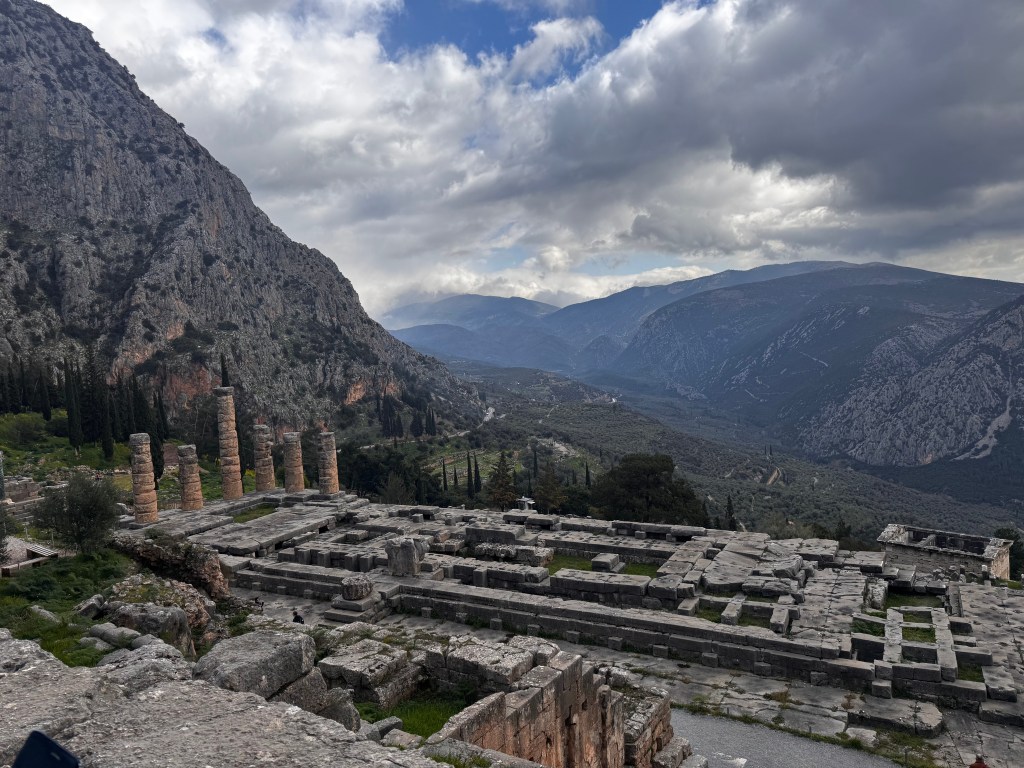
    The exterior of the Temple of Apollo rises from the earth like a stone sibling of the surrounding hills. In ancient Greece, temples were not built in isolation , they were set carefully into the land, blending human vision with natural beauty. This wide shot view reminds us that true strength comes from harmony with the environment, not dominance over it.

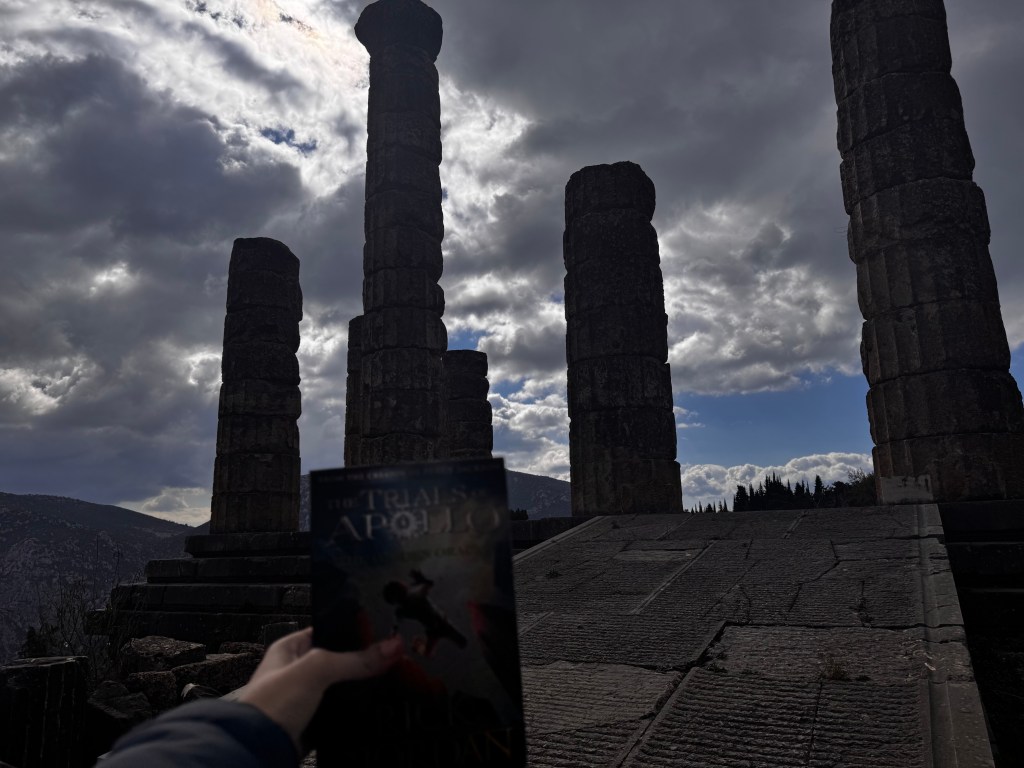
    Step closer, and the details of the columns of the Temple of Apollo come alive. The grooves and edges are softened by centuries of sun, wind, and rain. Like the rings of a tree, each weathered mark tells a story of resilience. In nature, strength grows slowly; in stone, endurance is revealed slowly. Both show us that beauty matures with patience.

    Look upward, and the temple is embraced by sky and earth. Sunrise bathes it in gold, sunset cloaks it in fire, and moonlight crowns it with silver. The Temple of Apollo’s architecture may be human-made, but its grandeur is revealed only through its natural backdrop. Without the sky, the stone is silent; together, they sing of eternity.

    image of temple of apollo with the book
    Timeless Apollo

    My fascination with Apollo began not just with history, but with stories. In Rick Riordan’s Trials of Apollo and the Heroes of Olympus series, Apollo is cast down from godhood and forced to live among mortals. Stripped of his power as the god of the sun, music, and prophecy, he must earn his way back to Olympus. That story of transformation, humility, and resilience mirrors what I see in this temple. Just as Apollo’s journey shows that strength is not instant but earned, the temple itself is a symbol of endurance , shaped by centuries, yet still standing tall.

    What does the Temple of Apollo teach us today? That strength and beauty outlast time. Nature proves this in every pinecone, walnut, or tree that grows patiently year after year. The temple proves it in stone, standing after millennia of storms and seasons.

    For those of us who seek connection with nature, the Temple of Apollo is not just a ruin of ancient Greek architecture. It is a reminder that when we live and build with respect for the natural world, what we create can endure alongside forests, mountains, and seas.

    Greece’s Lesson from Nature

    When we think of Greece, our minds often drift to the temples of Apollo, Acropolis skylines, and timeless ruinsstanding tall against the elements. But Greece is not just a monument to the past,it’s a living stage where nature continues to write new stories of resilience and beauty.

    Recently, Greece has taken bold steps to protect its natural heritage. Two vast new marine sanctuaries in the Ionian and Aegean Seas will safeguard turtles, dolphins, and seabirds across tens of thousands of square kilometers. On the island of Amorgos, local communities are joining scientists to give the sea room to breathe again ,restricting harmful fishing and cleaning coastlines. And after years of protection, loggerhead sea turtle nesting has hit record highs, a living reminder that when we protect, nature rewards us.

    These are not quick wins. They are acts of patience, of vision, of building something meant to last. They echo the same truth whispered by the stones of the Temple of Apollo.

    Whether carved in marble or carried on the tide, the beauty that endures is the beauty we protect long enough to thrive. Greece shows us that legacy is not built through speed or shortcuts , it is shaped through stewardship, care, and respect for the natural world.

    🌿 Now it’s our turn.
    If you believe in timeless beauty , whether it’s in a temple bathed in sunlight or a turtle swimming free in the Aegean, join me on this journey. Together, we can learn, share, and celebrate the resilience of nature.

    👉 Follow and subscribe for more reflections, stories, and visuals that remind us: strength and beauty truly outlast time.

  • The Beginning of Mahabutavani 🌿

    The Beginning of Mahabutavani 🌿

    Welcome to Mahabutavani , a space where nature speaks, and we take the time to listen.

    This project begins with a simple belief: that the world outside our windows still has endless wisdom to share. From the resilience of ancient trees to the quiet persistence of rivers carving stone, the natural world holds lessons in patience, growth, and renewal.

    Through immersive visuals, stories, and reflections, Mahabutavani will explore these rhythms. We’ll look at how the strength of forests, the flow of water, and the delicate balance of ecosystems mirror our own journeys as humans , with all our struggles, resilience, and transformations.

    This is not just about watching nature. It’s about slowing down, listening deeply, and rediscovering our connection to the living world.

    ✨ If you’ve ever felt a spark of calm walking under trees, or awe at a sunrise, or peace by a river’s edge , you already belong here.

    Thank you for joining me at the very beginning of this journey. Together, let’s let the voice of nature ,the Mahabutavani ,guide us.