The world outside felt heavier than usual this Easter. With the shadow of the US and Iran conflict stretching across global headlines and the kind of collective anxiety that settles into ordinary households when geopolitical tensions begin to feel uncomfortably close to home, we made a deliberate and perhaps quietly defiant choice to travel. Japan had been on our itinerary and this Easter break finally became the moment we honoured that promise to ourselves. There is something profoundly intentional about choosing to visit a country that has already lived through the absolute worst that human conflict can deliver and emerged not merely intact but genuinely, almost incomprehensibly, luminous. Our itinerary included several destinations across Japan but it was Hiroshima that sat at the centre of everything, the destination we approached with the most reverence and the least certainty about how we would feel standing inside it.
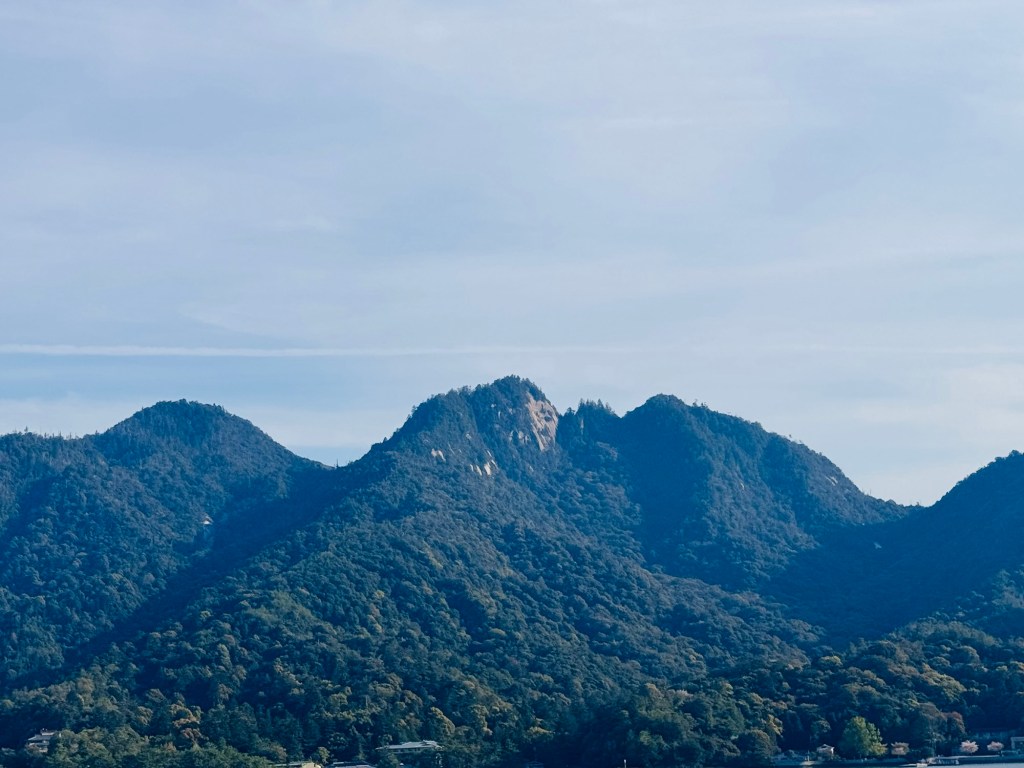
We had just walked out of the Hiroshima Peace Memorial Museum and I can tell you with complete honesty that no vocabulary I possess is adequate enough to describe what that experience does to the architecture of your soul. The melted watches permanently frozen at 8:15 AM. The human shadow burned into stone steps by a heat so violent it rewrote the physical world in an instant. The small battered lunch box belonging to a child who simply never came home. I walked out into the Hiroshima afternoon carrying something that was not quite grief, not quite guilt and not quite gratitude but something ancient and wordless that lived underneath all three simultaneously. We took the ferry to Miyajima Island that same afternoon, perhaps because the human spirit instinctively reaches for beauty when it has been standing too long inside darkness. The ferry crossing takes barely ten minutes but somewhere in the middle of that short journey standing at the railing with my camera raised toward the approaching island I stopped completely. There in the rocky ridgeline of Mount Misen rising with quiet authority above the treeline was unmistakably and undeniably a human face. Not a suggestion. Not a trick of afternoon light. A face of breathtaking composure with its brow settled, its eyes closed and its lips gently at rest as though a giant of immeasurable age had simply decided one unremarkable morning millions of years ago to lie down and become part of the permanent earth.
We climbed the temple stairs of Misen that same evening and I want you to understand that these are not the manicured steps of a tourist attraction. They are ancient, uneven, moss-edged and genuinely demanding, the kind of stairs that require something real from your body before they offer you anything in return. My legs were exhausted and my heart was still weighted from everything Hiroshima had placed inside it that morning, yet with every upward step I found myself thinking about the people of that city, the ones who never got to feel their legs ache from a good honest climb up a sacred mountain, the ones who never got another ordinary Tuesday. Climbing began to feel less like exercise and more like an act of living on behalf of those who could not. At the summit temple complex there burns a flame that the monk Kobo Daishi lit in the year 806 AD, a flame that has continued burning without interruption for over twelve hundred years through war and neglect and every catastrophe that history has thrown at this corner of the world. Standing before that flame with the weight of Hiroshima still fresh in my chest I felt something genuinely shift inside me because the message of that unextinguished fire was impossible to misread. Some things are simply more stubborn than destruction. Some flames simply refuse the instruction to go out.
From the summit of Misen the entire Seto Inland Sea unfolds before you like a revelation, islands scattered across silver water like punctuation in a sentence written by the earth itself, ferries crossing in slow deliberate arcs and the famous floating torii gate burning orange far below against the darkening water. I photographed everything yet the image I return to most consistently is not from the summit at all but from the ferry, that first unguarded moment when I raised my phone and the mountain showed me its face. That face exists less than thirty kilometres from the precise coordinates where an atomic bomb dissolved thousands of human faces in a single morning of 1945, and the proximity of those two facts, the obliteration and the endurance, the violence and the patience, is something I am still in the process of fully absorbing. Nature had placed a guardian face above this particular corner of the world and left it there across millions of years of geological time as though in quiet preparation for the morning a traveller would arrive from Hiroshima needing to be reminded that beauty outlasts destruction, that the earth keeps a human face turned gently toward us even in our most catastrophic moments and that hope is not a feeling but a geological fact written in stone above an island that refused to stop being sacred. Hiroshima broke something open in me that morning. Mount Misen, with extraordinary and unhurried grace, put it back together.
The quote that sums it all up :
“ Civilisations may fracture the earth with their wars and their wounds, but the nature itself has never forgotten the shape of a human face and never stopped wearing it with grace .”
Have you ever experienced a moment in nature that arrived exactly when your soul needed it most? I would love to hear your story in the comments


Leave a Reply